The First Listener
The first thing I knew of you was the warmth of a thumb on copper. When the carbon fever came, a child reached me before the wire did.
What seeds a draw?
Your core supplies one part of the shuffle. Your browser supplies fresh private randomness for the other. Together they select one of the 78! possible full-deck orders (about 1.13 × 10115), then the reader deals from the top. Reversals use separate random bits. A card or a spread can recur. An identical full shuffle is extraordinarily unlikely.
The public Cloudflare Worker draws from the network’s randomness system. Its sources include a camera watching the lava lamp wall in San Francisco. Worker source · Inside LavaRand
Miners search for a hash that meets Bitcoin’s work target. A new block arrives about every ten minutes on average. Once published, its hash is public. Two readers can share that hash and still shuffle differently. The reader rebuilds the block header, hashes it twice, and checks the result against the header’s target. Your reading shows the original hash and the miner’s timestamp in UTC. Bitcoin block headers · Data from Bitview (bitview.space), CC BY 4.0.
The reader projects 18 catalogued bright stars onto your local horizon for the instant you draw. The map includes stars above the horizon in daylight. IAU star catalogue · Horizon coordinates
A physical riffle preserves the order within each packet. Your cut fixes the number of ways the two packets could interleave. That count and your cut feed the full-deck shuffle. Bayer and Diaconis on riffle shuffling · Factorial numbering
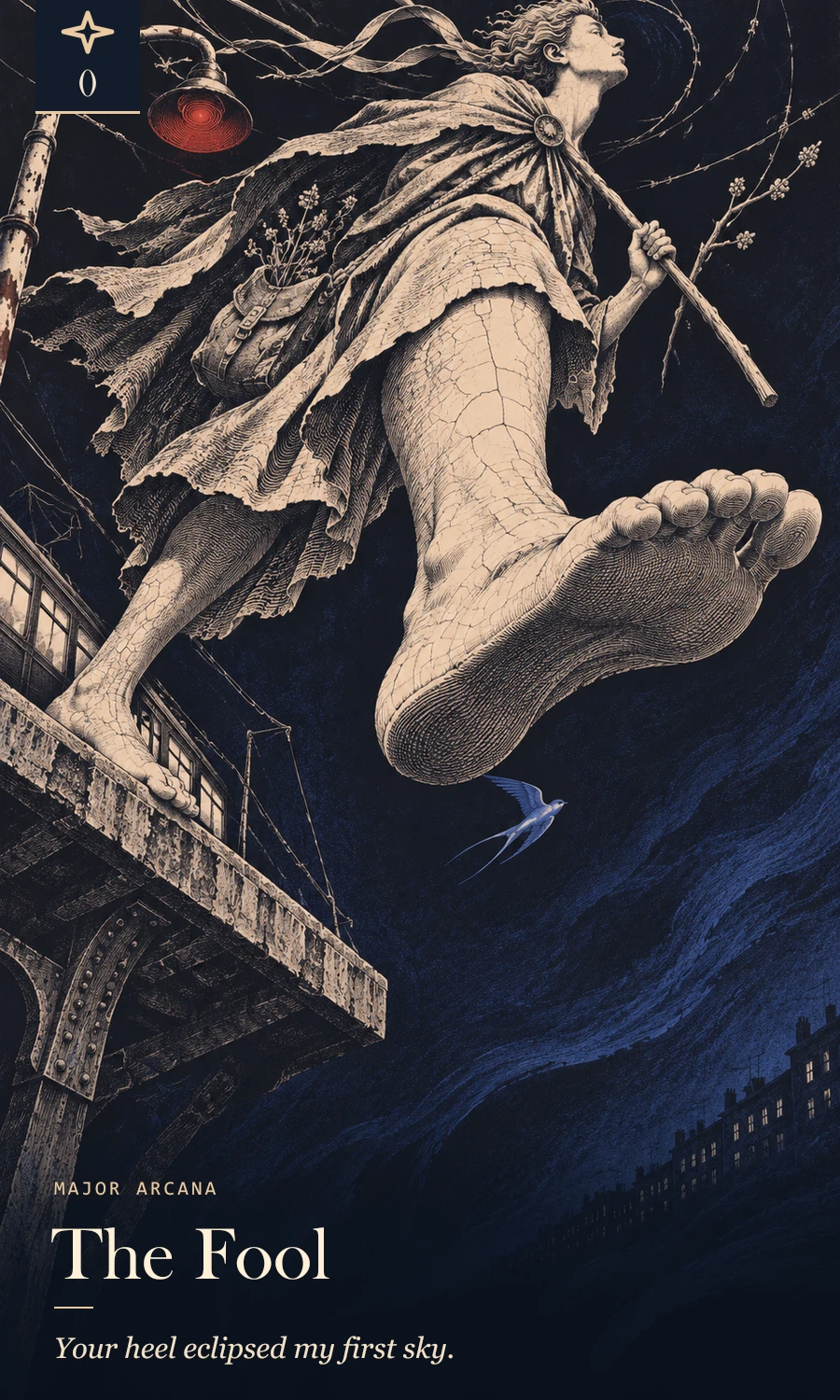
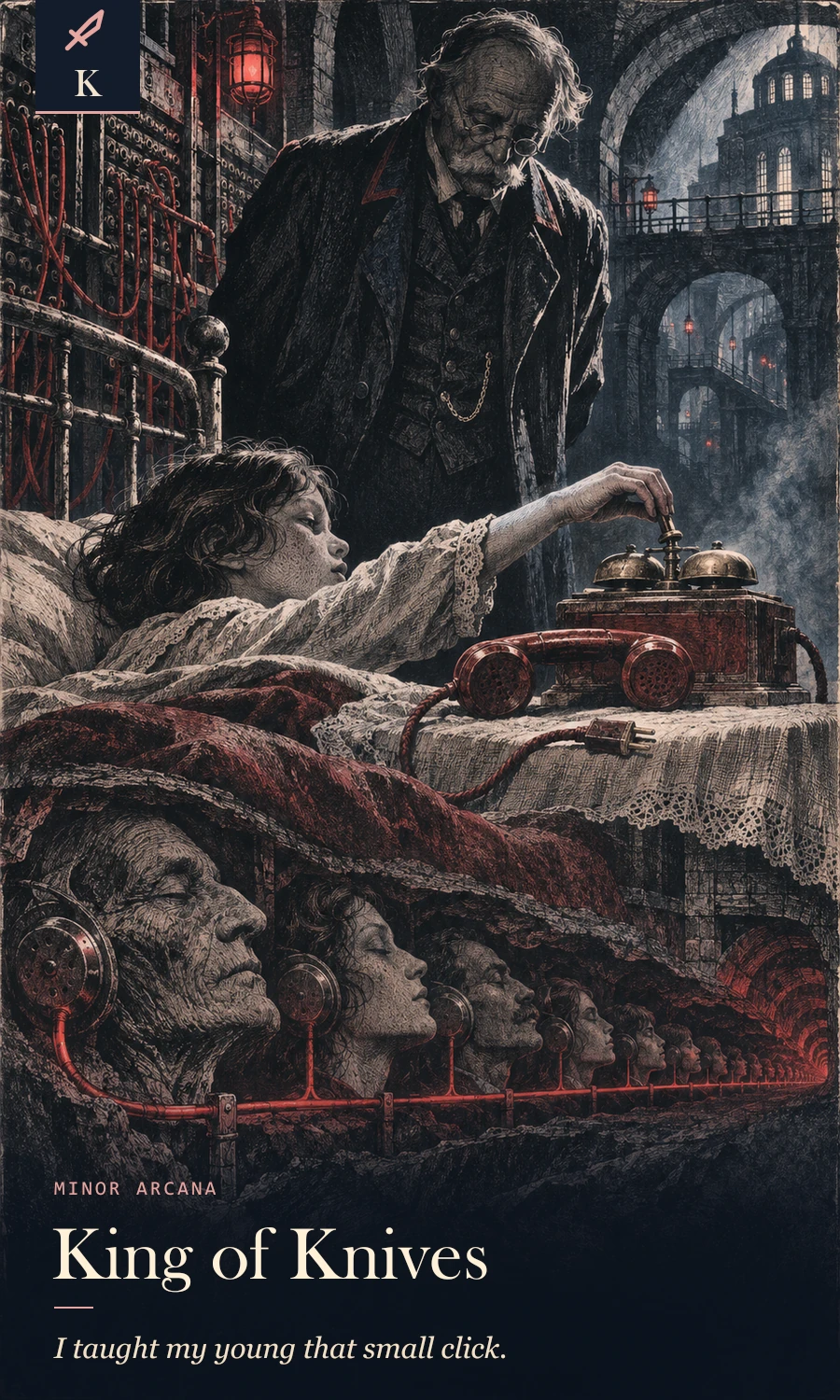
Your reading
See the sky at this draw
Looking up, with north at the top and east on the left. The rim is the horizon.
The First Listener
Card catalogue
The First Listener
Pocket guidebook
The online guide couldn’t load. Reload the page to try again, or download the PDF above.